Home appears unchanged at the beginning of the work period.
The same Structure occupies the same Grid. The expected ships remain in their hangars, and the shared account still shows a route used by the earlier shift. The first glance offers no reason for alarm.
Then three small differences appear.
When the new shift checks, the Structure Browser no longer shows one Service required for the planned work. A fresh pass through the Probe Scanner does not show a previously recorded Cosmic Signature. The relevant branch of the Chain was last confirmed by another pilot during an earlier work period.
These observations do not prove danger. The Service may be unavailable to this Character rather than absent for everyone. The Signature may have changed without affecting tonight’s purpose. The inherited Chain record may still describe a usable route.
Together, however, the differences break one important assumption: the state inherited from the earlier shift can no longer be used without review.
Chapter 4 established a Baseline as shared agreement. Part II begins by making that agreement observable. Familiarity is not the question. The conditions carrying the next decision must still match the dated state the group agreed to use.
Ordinary Is Evidence
Ordinary conditions are easy to overlook because they do not demand a response. The familiar Structure is present. The expected route record exists. A working Service appears where the group expects it. The next job has an owner.
Each quiet fact becomes useful only after it is recorded as part of a purpose.
A Baseline is that record. It says what Home was observed to support at a particular time, through particular Sources, for a stated kind of work. The record makes no claim that Home is safe, permanent or complete.
The distinction matters because normality is not one universal condition. A pilot preparing a short scanning flight may need a current view of the local system and the first relevant Connections. A group moving irreplaceable capability may require a deeper route account, confirmed access and a known fallback. Home can be ordinary for the first purpose and unready for the second.
Those differences need a reference point before they have meaning. The earlier shift did not merely report that everything was fine. It left a bounded account. A named pilot had observed the route used for its return. The required Service was visible to the Characters performing that work. Critical scanning capability was present, and no open job depended on an absent owner.
That account may be accurate and still be old.
Age does not make the earlier work careless. It makes the account historical. Present observations can be compared with it instead of asking memory to decide whether a difference feels important.
Ordinary evidence must remain modest. The Sensor Overlay can provide an overview of exploration sites visible through its selected display. The Probe Scanner can show Cosmic Anomalies and Cosmic Signatures; Anomalies do not need Probes to be located, while Cosmic Signatures do. These interfaces expose different observable layers. Neither reveals every event in the system, nor does either turn absence from one view into proof of safety.
The same restraint applies to infrastructure. The Structure Browser shows Structures a Character can access, together with the Services offered there. Characters with the relevant Corporation authority can see additional information about their own Structures, including remaining Fuel and Vulnerability State. The view belongs to the observing Character. A guest and an owner may therefore hold different correct observations at the same moment.
A Baseline preserves that boundary. It records visible to this observer at this time, not true for everyone until further notice.
Once ordinary conditions are described this way, change can be seen without being dramatised. The Baseline does not predict the next failure. It prevents a new condition from hiding behind an old feeling of familiarity.
Layers of Home
Home does not have one status.
Its System, Chain, infrastructure, assets and work can each support a different answer. Combining them into Home is fine removes the very distinctions needed when one part changes.
Begin with the System layer. At a recorded time, a named pilot observes the Cosmic Signatures and Cosmic Anomalies relevant to the intended work. The Source includes the interface and the active view used for the observation. The result is not a complete inventory of space. It forms a dated account of what the pilot could see and what remained outside the chosen scope.
The missing Signature belongs here. A fresh Probe Scanner view differs from the earlier record. That fact does not yet explain whether the earlier Signature expired, was filtered from view or was otherwise misidentified. The Baseline has done its job as soon as it makes the disagreement visible and returns the cause to Unknown.
The Chain layer records known Connections and the age of the observations supporting them. Freshness should not pass from the System layer. A new scan of Home does not automatically reconfirm every remote branch. Likewise, an old route can remain on a Shared Map without remaining suitable for a new movement.
Chapter 6 will develop this layer in full. For the Baseline, the minimum is clear: which branch matters to the current purpose, who last observed it, when that happened and what has not been checked since.
Infrastructure forms another layer. Separate the Structure from its Services, access and visible state. The hull may remain in place while a Service is unavailable. A Service may be offered while the arriving Character lacks the access needed to use it. Fuel and Vulnerability information visible to an authorised owner may be absent from a guest’s view.
The opening pilot can therefore record a precise observation: the required Service was not visible to this Character at this time. The cause remains open. That statement is more useful than the Structure is broken because it shows what must be tested next without claiming more than the view supports.
Assets create a fourth layer. A complete price list is unnecessary. The Baseline needs the small set of capabilities whose absence changes the agreed work. A scanning hull may be present but unavailable to the pilot expected to use it. Fuel may exist but be controlled through an access path that the person responsible for the Service cannot use. A replacement may be recorded outside Home while its route remains unconfirmed.
Record capability rather than reassuring quantity. Scanning fallback present and accessible to the named pilot at the last check supports a decision. There are several ships in Home does not support that decision.
The final layer is work. Jobs, movements and checks can remain open after the person who began them leaves. Their Baseline state should identify the current purpose, the Steward and the next decision. An unfinished task without an owner can make every other layer appear healthier than it is because nobody is yet testing the capability the task will require.
These five layers interact, but they should meet only after each has been read honestly. A missing Service affects work if the work requires it. An ageing Chain matters differently when a replacement or departure depends on it. A new Signature becomes important when it changes the route question the group needs to answer.
The Baseline is not a single green mark beside Home. Instead, it forms a short collection of dated claims whose relationships can be examined when the plan changes.
Age Every Observation
An observation without time is already borrowing certainty from the future.
Service available may have been true when the earlier pilot looked. Route usable may describe one completed movement. Scanning hull ready may reflect the owner who prepared it. Removing Source and age turns each statement into a promise that nobody made.
Every load-bearing observation needs four boundaries: what was seen, who saw it, when it was seen and for which purpose it was considered sufficient.
The Source is more than a Character name. It includes the path by which the state became visible. A direct scan, a Structure Browser view and a message from another pilot are different Sources. The message can be accurate, but it remains Reported until the current decision receives the confirmation it requires.
The Timestamp tells the next person when confidence began to decay. It does not supply a universal expiry. A local observation may remain useful for one decision while a remote branch needs another check before heavy movement. The rate of ageing comes from the temporary system and from the consequence attached to being wrong.
Purpose sets that consequence. A route observed for a scout was not necessarily checked to support transport. A Service confirmed for its owner was not necessarily confirmed for a guest. An asset counted for storage was not necessarily prepared for immediate use.
Shared Location Folders reinforce the same lesson. They use distinct access levels, can be connected as online or offline by a Character and can contain Locations with expiry. A Location missing from one pilot’s active view may reflect folder state or access rather than a changed Grid. The Baseline should record enough Source context to keep that possibility open.
Age can be shown without turning the record into a wall of clocks. The group needs Timestamps only where time changes interpretation. The last confirmation of the route carrying tonight’s movement matters. The exact age of an unused branch may not.
This selection prevents two failures. Recording no age makes inherited claims look current. Recording every possible time buries the claims that carry a decision.
The useful question is not how old is all our information? Ask instead: which old observation would change the next action if it were no longer true?
Changes Need Meaning
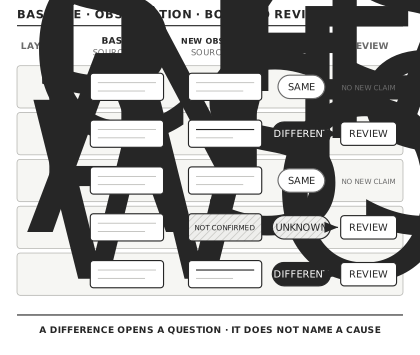
Difference is evidence. It is not yet interpretation.
The vanished Signature, unavailable Service and ageing Chain branch are three differences from the inherited Baseline. None should be promoted directly to a threat, a failure or a reason to abandon Home.
First ask whether the change touches the stated purpose. A missing Signature unrelated to tonight’s work may simply narrow the System account. An unavailable Service matters immediately if a job is about to depend on it. An old Chain record becomes urgent when the route is expected to carry the only replacement.
Then identify the smallest claim that changed. The Character did not see the Service. The current Probe Scanner result differed from the earlier result. The relevant branch has no confirmation from the present work period. These statements preserve observation before explanation.
Next compare Sources. If the earlier Service observation came from an owner and the new one from a guest, access may explain the difference. Signature accounts built from different visible selections are not yet comparable. A Chain branch only Reported to the earlier shift may be older than the message that carried it.
What remains after that comparison can be classified without drama.
Some variation is expected and does not interrupt work. Some change degrades a capability and requires a new decision. A contradiction between Sources calls for confirmation. Missing context returns the condition to Unknown.
Unknown is not an accusation. It is correct when the Baseline can no longer support the intended conclusion. The group can pause the affected work while leaving unrelated work untouched.
The opening differences now produce proportionate responses. The required Service is checked through the view of the Character meant to use it and, if needed, through an authorised owner. The missing Signature is scanned again under a known view before any route conclusion is changed. That ageing Chain branch is withheld from the planned movement until the relevant Connections are observed for that purpose.
No emergency has been declared. The Baseline has created time to investigate before several assumptions combine into one.
Build the Watch
A useful watch is smaller than Home.
Trying to monitor every Object, asset, permission and activity would turn ordinary residence into permanent reporting. The result would be detailed and unread. Important changes could hide inside the effort meant to reveal them.
Choose the few signals that carry the current purpose.
For the System, this may be the Signature account needed to rebuild the relevant route or begin the planned work. Its record names the observing pilot, time and view. The group does not need to treat every unrelated Anomaly as a standing alarm.
For the Chain, watch the last confirmed observation of the branch carrying movement, replacement or return. The signal is not the number of Connections on the map. It asks whether the required relationship has current evidence at the depth the next decision needs.
For infrastructure, observe the particular Service and access path on which work depends. A general Structure status cannot replace a test through the Character expected to act. Owners may add Fuel and Vulnerability observations when those conditions carry the purpose; guests should not pretend to see owner-only information.
For assets, watch one or two capabilities whose absence would change the plan. The signal might be accessible scanning capability or the fallback needed to withdraw. Value and quantity remain secondary to use.
For work, keep the Steward and next decision visible. An open task with no confirmed owner is itself a deviation, even when every physical input remains present.
Each signal needs a trigger. The trigger is not always a fixed schedule. It may begin with a work period, a movement of important capability, a handover, an access change or the moment a new job depends on the condition. Recheck when the consequence of stale information changes.
The beginning of a work period offers a useful example. Whoever takes over does not repeat every observation ever attached to Home. Instead, they read the purpose left by the earlier shift and identify the conditions that purpose hands forward. Tonight, those are the branch expected to carry movement, the Service required when the movement ends and the capability needed if the route must be rebuilt.
The first pass establishes what can continue immediately. Unrelated assets do not need to be counted again. A remote branch outside the intended route can remain outside the watch. Work that depends on neither the missing Service nor the ageing Connection may proceed under its own Baseline.
The second pass addresses disagreement. The pilot does not erase the earlier Service observation merely because the current view differs. Both observations remain true within their Sources: the earlier Character saw the Service then; the arriving Character does not see it now. The next confirmation is assigned through the access path that the planned work will actually use.
The Chain branch receives the same treatment. Its Shared Map entry is retained as history, but its old confirmation is not presented as current route knowledge. A pilot assigned to the movement observes the relevant Connection again. Until that happens, only the affected movement waits. The map has not failed; its uncertainty has become visible before it could be mistaken for a promise.
At handover, the watch becomes a short account of changed conditions and open decisions. The next shift does not need a performance report. It needs the remaining Signature question and the limits of the Service confirmation. It also needs to know that the route branch was observed after the movement was postponed. Each statement keeps its Source and time.
This rhythm matters more than a permanent checklist. Read the inherited purpose. Confirm the conditions carrying the next consequence. Preserve disagreement until its Sources can be compared. Hand over the remaining Unknowns with owners. The details change with the work, while the discipline stays recognisable.
The watch also needs a response boundary. When a signal differs from the Baseline, record the observation, limit the affected purpose and assign the next confirmation. Do not turn every difference into a general stop. Do not allow work to continue merely because no single difference looks dramatic.
This small set can change as Home changes. A Service irrelevant during a scanning period can leave the watch. A transport route can enter it when replacement begins. The Baseline stays useful because it follows dependency rather than habit.
The opening pilot can now describe Home without calling it fine or unsafe. The System account contains one unresolved Signature difference. The route needed for movement is old and awaiting a fresh observation. One required Service is unconfirmed for the intended Character. Assets and unrelated work remain within their stated conditions.
That is enough to decide what pauses and what continues.
Field Principle
A Baseline is a dated comparison, not a promise that ordinary conditions will persist.
Separate System, Chain, infrastructure, assets and work. Give each load-bearing observation a Source, Timestamp and purpose. Treat a difference as evidence before naming its cause. Watch only the conditions whose change would alter the next decision.
Home becomes readable when a new observation can answer three questions: what was expected, what is different and which work now requires review.
The answer need not settle every cause. It must expose the boundary of the decision. A Character who cannot see a required Service has established an access question, not a Structure-wide failure. A changed scanning result has established a System difference, not hostile intent. An ageing route record has established the need for confirmation, not the present condition of every Connection it once described. Precision keeps a small Unknown from spreading into a general verdict about Home.
That precision also preserves effort. Pilots recheck the condition on which the next decision depends. Unrelated observations need not be repeated merely to make the Baseline look complete.
That is the practical value of the Baseline. It gives ordinary residence a memory that can be questioned. New evidence can amend it without rewriting what earlier observers actually saw, and work can be limited without turning every uncertainty into alarm.
The Chain remains the oldest unresolved condition. Its visible branches still carry earlier observations, reports and assumptions from another work period. A Baseline can expose that age. It cannot keep the route honest by itself.
Chapter 6 follows the Chain across time.